Security·
Beyond the keycard: modern access control for UAE offices
Beyond the keycard: modern access control for UAE offices — biometrics, mobile credentials, time zones and CCTV integration.

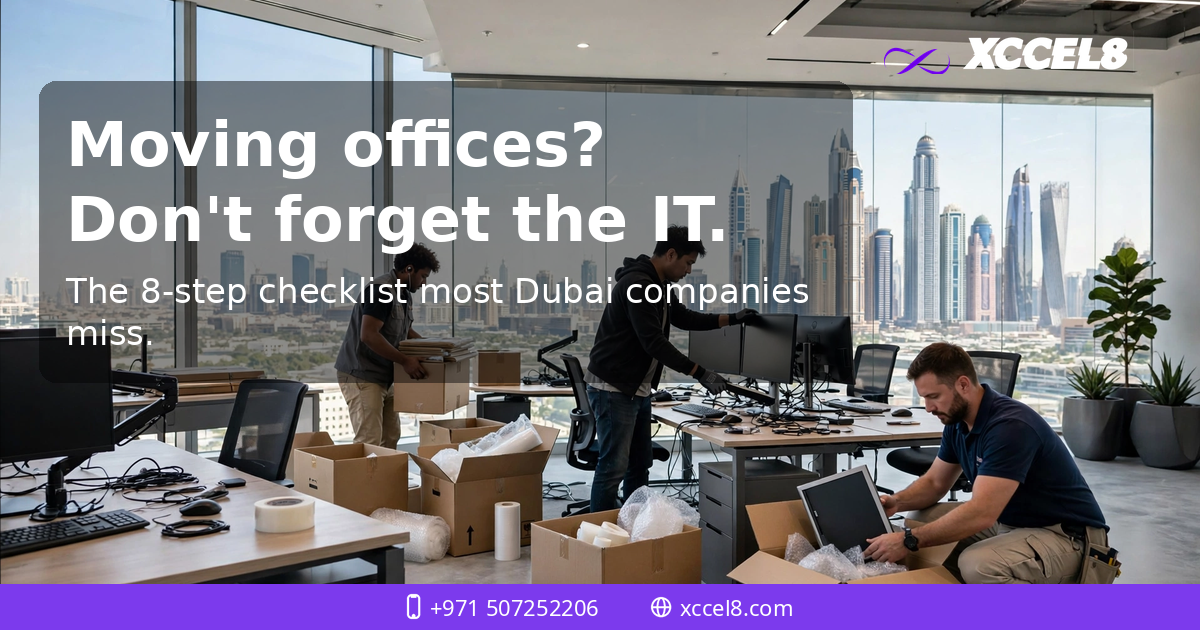
Office moves in Dubai happen fast. A lease ends, a bigger floor opens up in Business Bay or JLT, and suddenly the whole company is relocating in six weeks. Furniture, fit-out, Ejari, DEWA — the operations team runs a tight list. And IT? IT usually gets a phone call two weeks before moving day: “Can you just make everything work in the new office?”
That call comes too late, almost every time. Here is the checklist we wish every company had from day one.
1. Order the internet line 4–6 weeks out — not 2
This is the single most common mistake. Business internet in the UAE is not plug-and-play: the provider needs to survey the building, confirm fibre availability, run the last-mile connection and provision the line. In some towers that is quick; in others it is a six-week job with landlord approvals in between. Order late and your team starts Monday with no internet — working off mobile hotspots while the provider’s technician is “coming tomorrow.”
Plan for overlap: keep the old office’s line live for a week after the move. It costs a little extra and saves you completely if cutover slips.
2. Cable the new office before the ceilings close
Structured cabling is the nervous system of the office — every desk, meeting room, printer, camera and access point connects through it. And it has to go in during the fit-out, before ceilings close and walls are painted. Retrofitting cable after handover costs three to four times more and means drilling through your brand-new office.
Rule of thumb: minimum two data points per desk (one for the computer, one spare), plus dedicated points for printers, meeting-room screens, Wi-Fi access points, CCTV cameras and door controllers. Run Cat6A — it handles 10-gigabit and gives the cabling a 10–15 year life.
3. Survey the Wi-Fi — don’t guess it
“Just put a router in the middle” does not work in a real office. Concrete core walls, glass partitions, neighbouring networks on every floor — Dubai office towers are hostile radio environments. A proper Wi-Fi survey maps signal across the actual floor plan and places access points where coverage is needed: meeting rooms, collaboration zones, the corner everyone actually sits in.
Get this wrong and you will spend the first month fielding “the Wi-Fi doesn’t work in the boardroom” complaints. Get it right and nobody ever thinks about Wi-Fi again — which is exactly the point.
4. Port the phone numbers early
Moving from PRI lines or an old PBX to IP telephony? Number porting in the UAE takes coordination between providers, and it does not happen overnight. Start the porting process the moment the move is confirmed. The goal: on moving day, customers dial the same numbers they have always dialled and reach your team — who might be sitting at new desks with softphones on their laptops.
This is also the moment to modernise: cloud PBX, mobile twinning for staff on the move, call queues for sales and support. A move is the cheapest time to upgrade, because you are touching everything anyway.
5. Plan the server room like it matters — because it does
The new office needs a proper home for the network: a ventilated cabinet or small comms room with dedicated power, cooling and cable management. We have seen companies move into beautiful new offices and stack the core switch on a shelf in the pantry. Heat kills hardware quietly — a switch that runs hot for a year fails right when you need it most.
Size it for growth: leave 30–40% empty rack space. You will add things.
6. Don’t forget physical security
CCTV cameras, access control readers, the alarm panel — they don’t move themselves, and in Dubai CCTV installations need SIRA compliance. Plan the camera layout for the new floor, re-register the system, and make sure the NVR has somewhere to live with proper storage. Door access credentials need reissuing or migrating. None of this is difficult, but all of it takes scheduling — and security companies book out.
7. Label everything, move in phases, test before Monday
The move itself: every cable, device and box labelled by destination — not “IT stuff,” but “Floor 2, Finance, Desk 14.” Move network infrastructure first, workstations second. Then test everything before the first working day: internet speed at the desk, Wi-Fi in every room, phones ringing, printers printing, cameras recording, door badges opening doors. A Friday move with Monday testing is a recipe for a lost week; test on the weekend.
8. Decommission the old office properly
The old space still holds your data: hard drives in forgotten desktops, the old NVR’s recordings, documents in the printer’s memory. Wipe or destroy storage media before handing back the keys. Return leased lines and equipment, cancel or transfer the internet contract, and collect every access badge.
The short version
Start IT planning the day the new lease is signed — not two weeks before the move. Internet first, cabling during fit-out, Wi-Fi by survey, phones ported early, and everything tested before Monday morning.
At Xccel8, office IT relocation in Dubai is something we do end-to-end: network design, structured cabling, Wi-Fi, IP telephony and security systems — planned around your moving date, executed over the weekend, tested before your team walks in. One team, one timeline, no finger-pointing between vendors.
Too technical? We will simplify it. Talk to us for a free consultation — tell us your moving date and we will build the IT plan backwards from it.
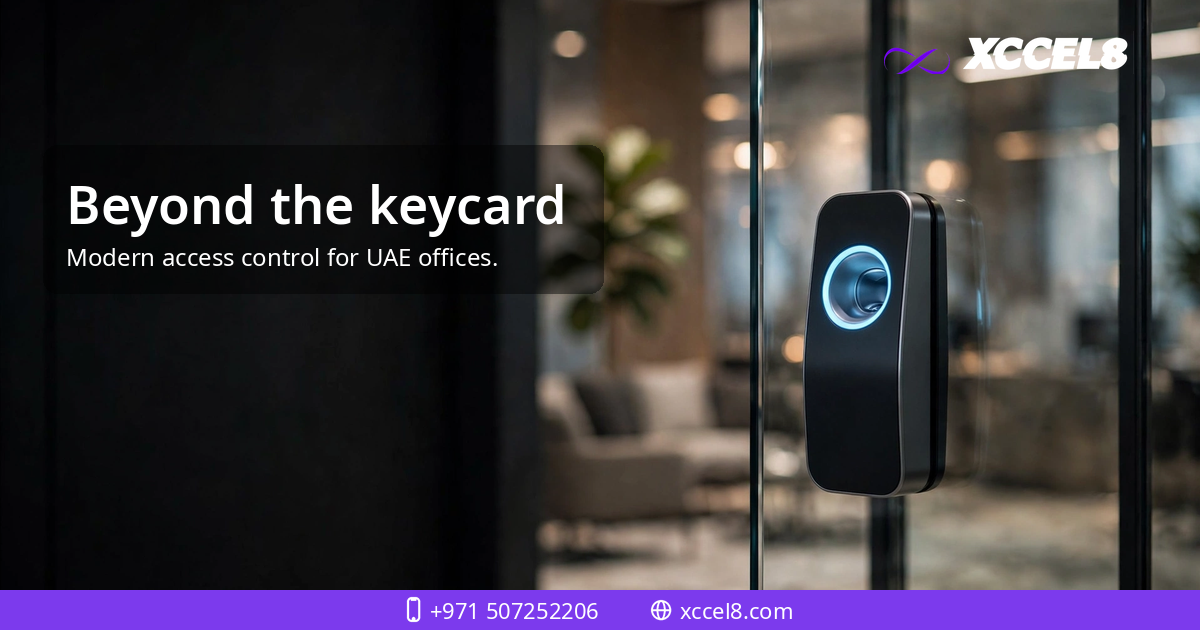
Beyond the keycard: modern access control for UAE offices — biometrics, mobile credentials, time zones and CCTV integration.
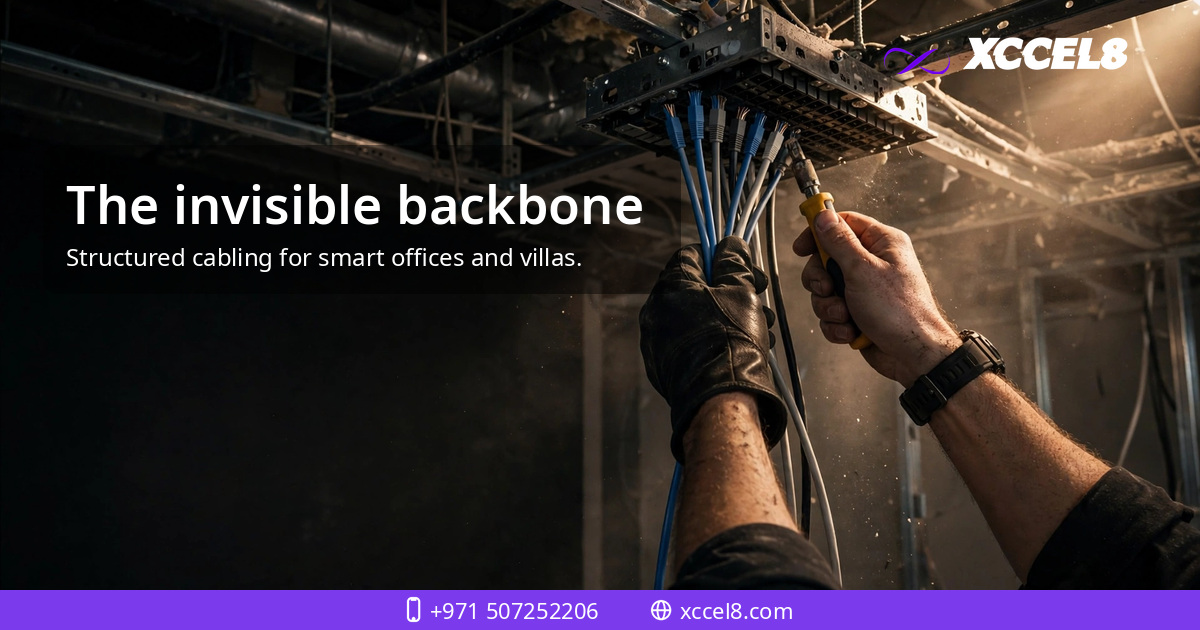
Structured cabling: the invisible backbone of smart offices and villas — why to get it right before the ceilings close.
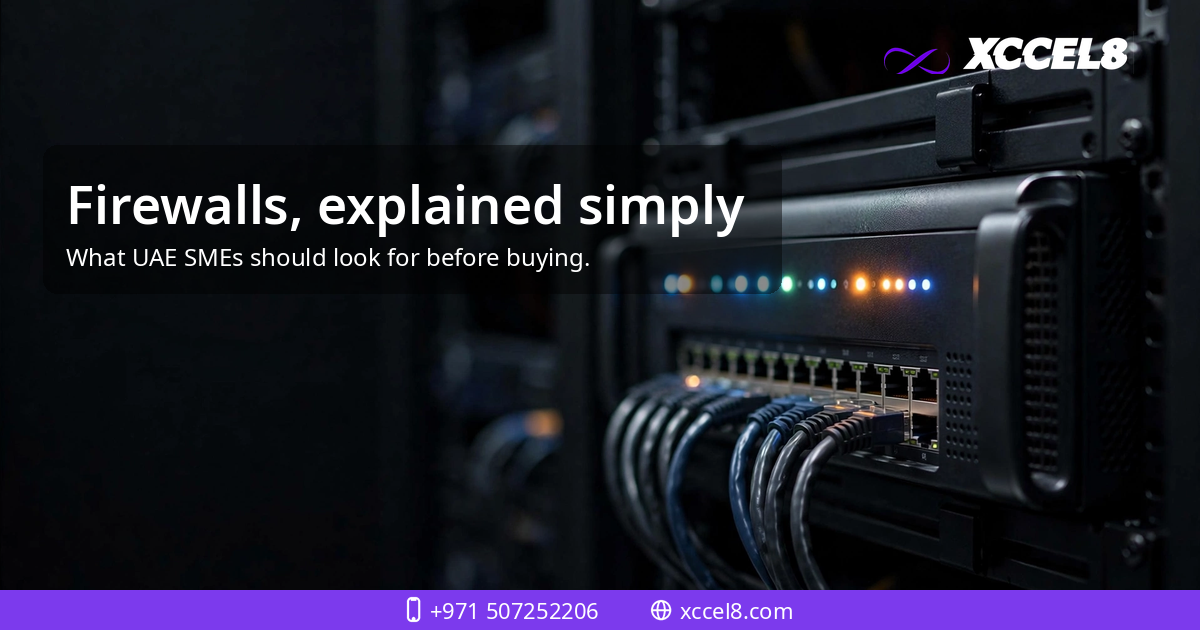
Business firewalls explained: what UAE SMEs should look for before buying — the 6-point checklist, right-sizing, VPN and threat inspection.
Tell us what your business needs — our engineers will cut through the jargon and recommend the right solution at the right price. No obligation.
Thanks — our team will contact you shortly.