Security·
Beyond the keycard: modern access control for UAE offices
Beyond the keycard: modern access control for UAE offices — biometrics, mobile credentials, time zones and CCTV integration.

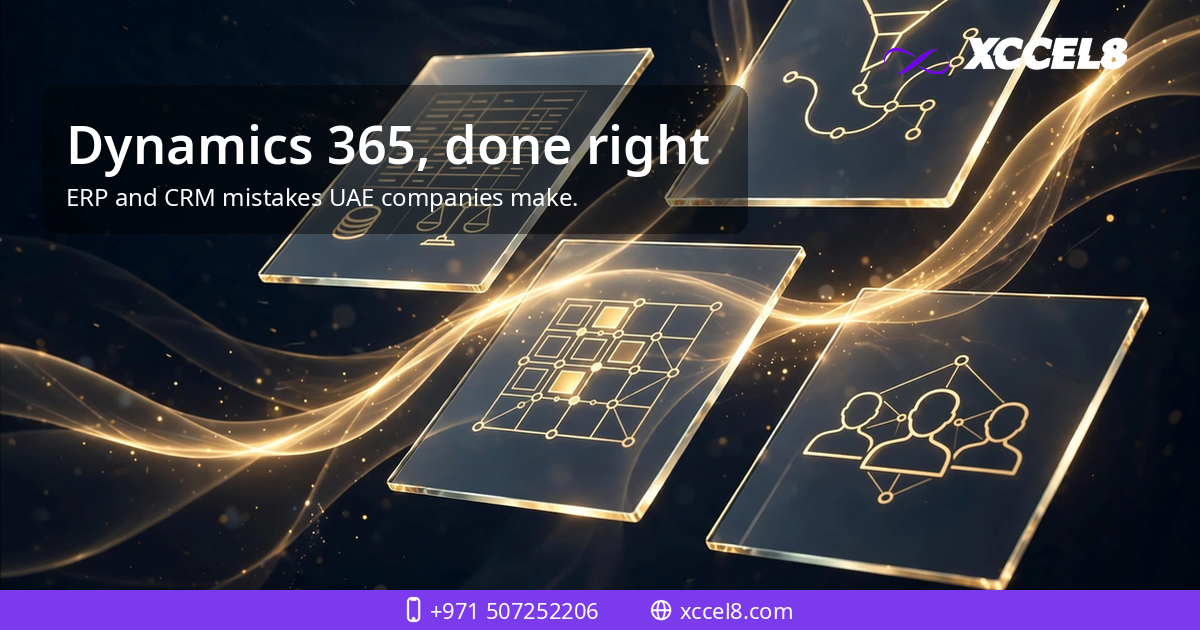
Every growing UAE business eventually hits the same wall: the accounting software cannot talk to sales, sales cannot see inventory, and management runs the company on spreadsheets stitched together every month-end. Microsoft Dynamics 365 exists to tear that wall down — one connected system for finance, operations, sales and customer service.
But there is a wide gap between owning Dynamics 365 licences and running your business on it. That gap is where implementations fail, budgets burn and teams quietly go back to spreadsheets. Here is what UAE companies get wrong most often — and what a proper implementation looks like.
Mistake 1: buying licences before mapping processes
The most expensive mistake happens before anything is installed. Companies buy Dynamics 365 licences, then try to bend their operations around the software’s defaults. It should work the other way: your quote-to-cash process, your procurement approvals, your inventory flows and your VAT handling get mapped first, and the system gets configured to match how your business actually runs. Licence-first, process-later is how you end up paying for modules nobody uses while the real workarounds live in Excel.
Mistake 2: treating it as plug-and-play software
Dynamics 365 is not an app you install — it is a platform you implement. The difference matters. Out of the box it is a powerful skeleton; the value comes from configuration: your chart of accounts, your approval hierarchies, your sales pipelines, your warehouse logic, your reports. Companies that skip proper implementation end up with an expensive system that mirrors their old chaos instead of fixing it. The implementation is the product.
Mistake 3: migrating dirty data
Nothing poisons a new ERP faster than old data. Duplicate customer records, dead stock items, five years of unreconciled transactions — migrate all of that into Dynamics 365 and you have simply moved the mess into a nicer building. A proper implementation cleans before it migrates: deduplication, archiving what is historical, and defining what “good data” looks like going forward. Data migration is not a copy-paste job; it is the foundation everything else stands on.
Mistake 4: using a tenth of what you paid for
This is the quietest waste in Dynamics 365 projects. A company implements the Sales module, declares victory, and keeps finance in the old accounting tool and operations in spreadsheets — paying for an integrated suite while running disconnected systems. The power of Dynamics 365 is that a sales order flows into inventory, invoicing and reporting without retyping. Every module left unused is integration value left on the table.
Mistake 5: skipping training and adoption
The best-configured system in the world fails if the team will not use it. We regularly see implementations where training was a single afternoon and the “manual” was a PDF nobody opened. Adoption needs a plan: role-based training, super-users in each department, and support through the first month-end close on the new system. People do not resist new software — they resist being left to figure it out alone.
Business Central or Finance and Supply Chain?
One choice shapes everything: smaller and mid-sized UAE businesses usually belong on Dynamics 365 Business Central — finance, sales, purchasing and inventory in one manageable package. Larger operations with complex manufacturing, warehousing or multi-entity structures need Finance and Supply Chain Management. Picking wrong means either outgrowing the system in two years or drowning a 30-person company in enterprise complexity. Sizing this correctly at the start saves a reimplementation later.
What a proper Dynamics 365 implementation includes
A professional implementation starts with discovery: your processes, your pain points, your reporting needs, your VAT and compliance requirements. Then the design: which apps, which entities, configured to your workflows — not a template with your logo on it. Then clean data migration, integrations with what stays (payroll, e-commerce, banking), thorough testing with your actual month-end scenarios, role-based training, and hypercare support after go-live. Done this way, go-live is a non-event — the system simply starts working.
This is also where Dynamics 365 connects to the rest of your business: Microsoft 365, Power BI reporting, and industry-specific tools can all plug into the same data instead of living in separate silos.
The process review costs nothing; the wrong implementation costs everything
If there is one action to take from this article, it is a proper scoping conversation before you commit. Most failed Dynamics 365 projects we encounter were not bad software — they were good software implemented without understanding the business first. An honest partner will tell you which apps you need, which you do not, and whether you are ready.
Xccel8 implements Microsoft Dynamics 365 for UAE companies end to end: process mapping, configuration, clean migration, training and ongoing support.
Too technical? We will simplify it. Talk to us for a free consultation — we will look at how your business runs today and show you exactly what Dynamics 365 should look like for you.
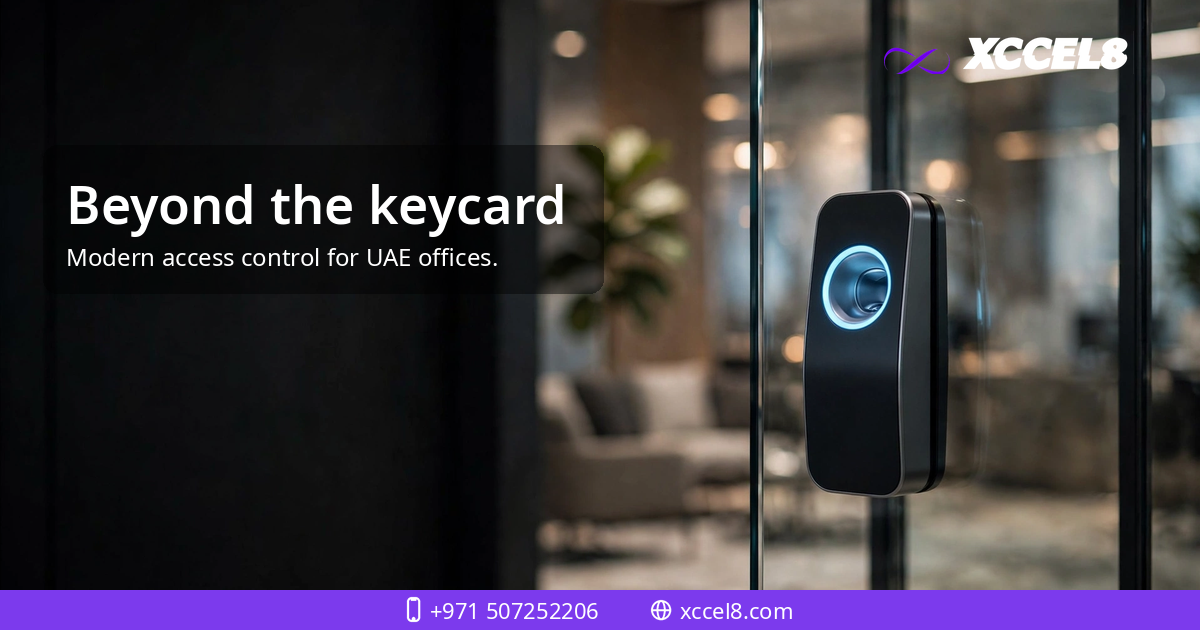
Beyond the keycard: modern access control for UAE offices — biometrics, mobile credentials, time zones and CCTV integration.
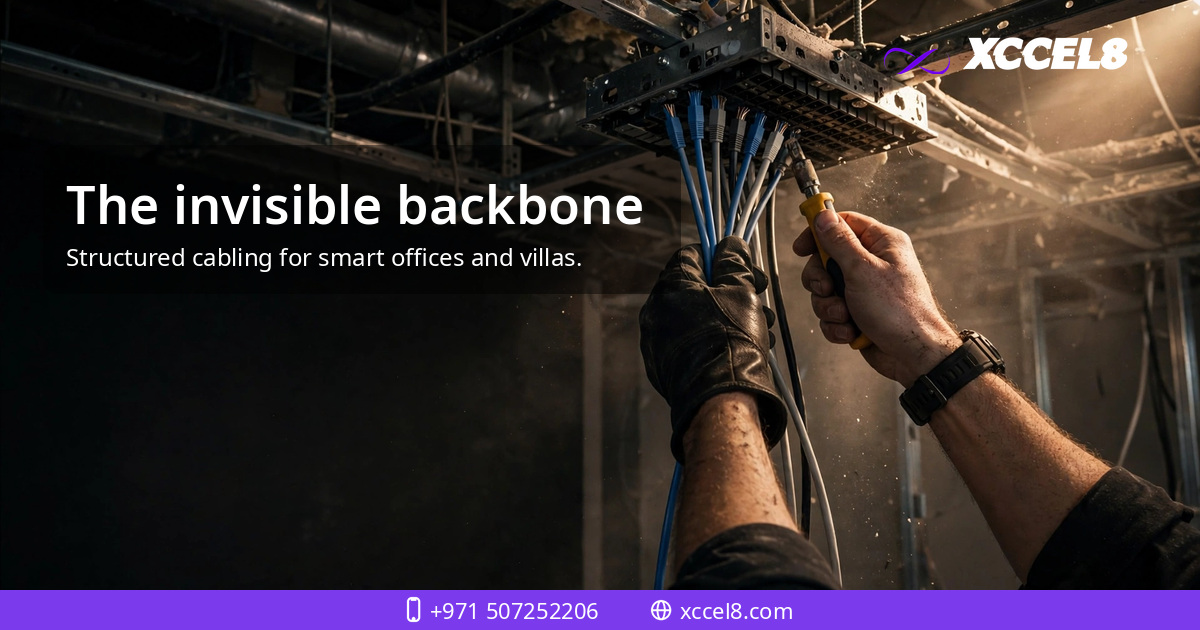
Structured cabling: the invisible backbone of smart offices and villas — why to get it right before the ceilings close.
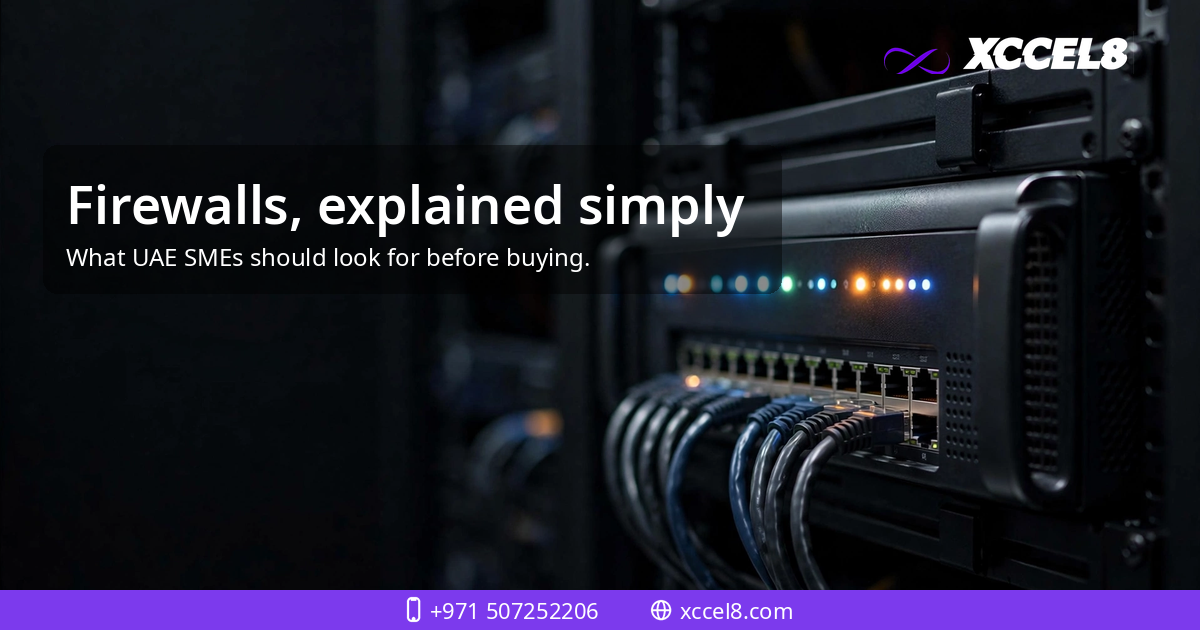
Business firewalls explained: what UAE SMEs should look for before buying — the 6-point checklist, right-sizing, VPN and threat inspection.
Tell us what your business needs — our engineers will cut through the jargon and recommend the right solution at the right price. No obligation.
Thanks — our team will contact you shortly.